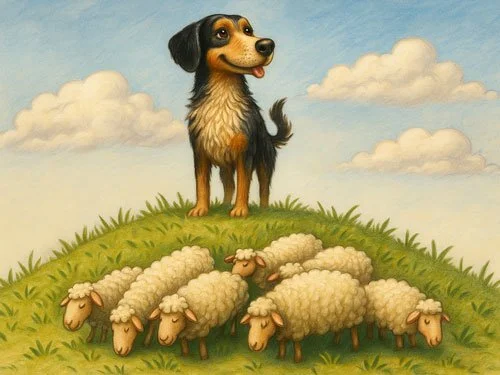
Underdog
What is an idiom? An idiom is a phrase or expression. They are tricky to understand as their meanings do not directly relate to the individual words used in the phrase.
Definition:
The English idiom "underdog" means is a person or team who is not expected to win. They are weaker, have fewer advantages, or face a stronger opponent. People often support them because they want them to succeed.
Origin:
The idiom comes from the 19th century and originally had a literal meaning. In sawmills, large logs were cut by two workers using a long saw:
The person on top was the “top dog.”
The person underneath the log was the “under dog.”
The worker below had the hardest job. Sawdust fell on him and it was physically tougher. Over time, “underdog” came to describe anyone in a difficult position or someone with a low chance of success.
Examples:
Today, the idiom is used in a wide range of everyday situations, and its meaning has expanded beyond its original literal origin in sawmills. Here are examples of how the idiom can be used in sentences:
Business context:
"Maria started her company with no money, but she didn’t mind being the underdog, she worked hard and eventually became successful."
Sports context:
"Everyone thought our team would lose, but the underdogs surprised everyone and won the match."
Education context:
"He was the underdog in the spelling competition, but he studied every night and finished in second place."
“He stepped onto the court knowing he was the underdog and the odds are against him.”
David and Goliath: A Classic Underdog Story
David is an underdog because he faces Goliath with every disadvantage. David is young, small, and inexperienced in battle, while Goliath is a giant warrior, fully armed and feared by all. David has no armor or sword, only a sling and a few stones, and even his own people doubt he can win. Everything about the situation suggests he should lose, which is exactly what makes his unexpected victory the perfect example of an underdog overcoming overwhelming odds.
More English idioms explained…